Pay-Per-Click (PPC): The Big Marketing Movement
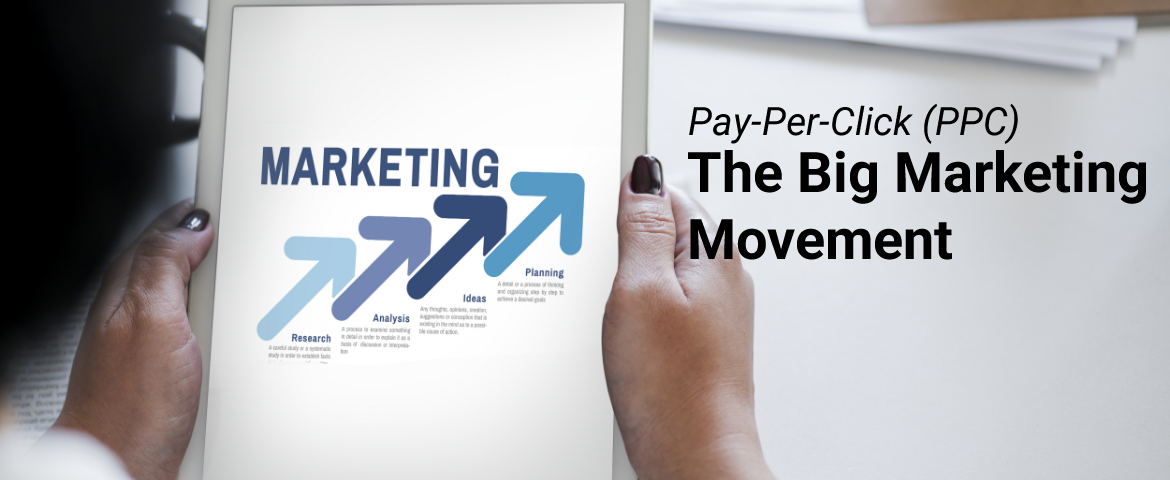
Within the dynamics of the marketing world, every day is an interaction with up and coming marketing innovations. That said, one such innovation that has been taking over the marketing landscape is none other than, Pay-Per-Click Marketing. Having made its way all around us, PPC is poised to act as the cornerstone of successful marketing campaigns. From conducting a Google search or perusing through social media, the internet is flooded with PPC campaigns.

Understanding Pay-Per-Click (PPC) Marketing

Emerging as the most dynamic form of digital marketing, PPC capitalizes on a marketing model, wherein marketers pay publishers like Google or Facebook, a fee, every time the audience clicks on their campaigns. As brands only have to pay a fee when a user clicks on their marketing campaign, PPC has been regarded as a cost-effective marketing strategy, suitable for diverse businesses. Attributed as yielding a good return on investment, PPC marketing can be conducted on a plethora of platforms ranging from Google and Amazon to all other social media platforms.
That said, the most common form of PPC marketing is done through search engines. This typically involves an auction, wherein marketers bid on keywords that are also used by marketers to boost the rank of the campaign on the search engine results page, ensuring it pops up on the first page. From thereon, the search engine uses a complex algorithm to rank the campaigns.

PPC is not the same as SEM

Often these two marketing terms have been used interchangeably, but it’s important to understand that these two marketing strategies are not the same. In fact, PPC marketing falls under the purview of SEM (Search Engine Marketing). While PPC advertising is a completely sponsored marketing tactic, SEM encompasses both paid and unpaid marketing activities, with the main purpose of accumulating organic traffic and visibility.

Reasons to Implement PPC Marketing

Becoming a fan-favourite of all marketers, thanks to the low investment, measurability, and trackability, PPC is a true rarity amidst the evolving landscape of digital marketing. Apart from this, PPC offers a range of exclusive advantages that differ from any other marketing avenues, demonstrating the need for its implementation.

Cost-Flexibility

It allows marketers to set a specified budget for campaigns, and depending on the result, marketers can either scale up or take a break.

Measurable and Trackable

Not only can PPC campaigns be measured, but they help brands keep a track of their long-term marketing goals. By leveraging analytics tools, marketers can measure key metrics like ROI, real-time clicks conversion and impressions.

Targeting Audience

PPC marketing allows marketers to target specific audiences based on the search history, interests, and demographics which helps in maximizing impressions and reaching the right audience.

Brand Building

It can go a long way in increasing brand awareness, irrespective of whether users click on the ad, they will still be able to remember the brand name.

Refining Other Strategies

The data collected from PPC campaigns comes in handy to reform the SEO and overall content marketing strategy.

Art of Managing PPC Campaigns

It’s pivotal to understand that creating and launching PPC marketing campaigns is not enough to design a result-driven marketing strategy, this process also requires meticulous reviews and optimization. Marketers need to regularly monitor the campaigns and analyse their performance accordingly. In addition, it is essential to keep updating the keywords by experimenting with them, while also avoiding the use of underperforming keywords to save your budget. Moreover, PPC services based on targeted audiences will work wonders for boosting the Click Through Rate (CTR) and quality score. Lastly, managing PPC will fail to be impactful without completing landing pages, content and CTAs.

Focus on content

Content creation plays a critical role in attracting customers at every stage of the lead generation process. To capture leads amidst the customers’ purchase journey, focus on educational content for awareness, content providing solution or making customers realize the needs. This will ensure the brand messaging is reaching the right target customer at the right channel.
Bottomline
PPC marketing is the way to go, especially if you’re low on budget and are looking for a result-backed marketing strategy. It serves as a robust basis for analysis of key performance metrics while being a game-changer in enabling businesses to achieve their short and long-term marketing objectives. As the marketing landscape continues to evolve, PPC marketing is poised to become the disruptive marketing trends for 2024 and beyond.