 +971 50 5473745


E-commerce Web Design: Key Elements for Success in 2025
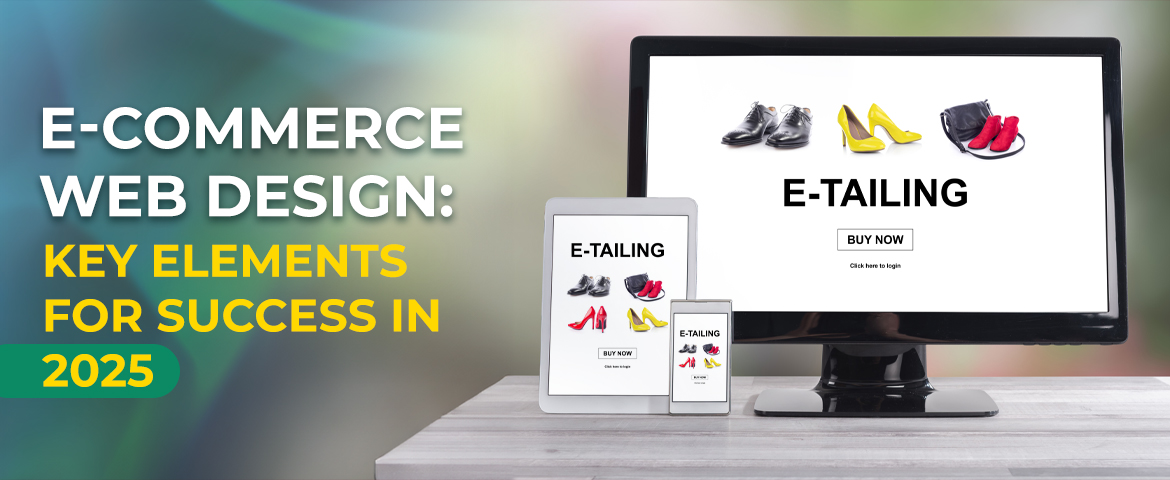
In today’s digital marketplace, a well-designed e-commerce website is important for selling and giving a good user experience. In the plethora of choices available to consumers, an effective web design can differentiate your brand. In this blog, we will discuss the must-haves in the design elements that make up a successful e-commerce website, particularly on product pages, checkout processes, and user trust indicators.
Why You Should Pay Heed to Best Practices in E-commerce for Success
Now it’s really hard to shine out in the marketplace without having best practices in the design of an e-commerce website. Here’s why an emphasis on these practices will help make a difference for your online store:
- Enhanced User Experience : A great design makes it easier for a customer to navigate through your website, thus raising the probability for satisfaction and conversion.
- Better Conversion Rate : Good CTAs at strategic points of your website will direct visitors to make purchases and therefore boost conversion rates.
- Makes it Visible : Using SEO best practices will ensure your website is ranked higher on search engines, thereby bringing more organic traffic and customers to your store.
- Fosters Loyalty : The rewards and personalized experiences that encourage loyalty with the customer create lasting relationships, thereby encouraging repeat business and brand advocacy.
- Establishes Trust : With customer reviews and testimonials displayed, it gains credibility; potential customers would feel comfortable in their decisions to make purchases.
- Keeps You Relevant and Competitive : Being in touch with industry trends and the preferences of the consumers would enable it to adapt quickly, thereby remaining fresh in the minds of the consumers.
Implementing these best practices will transform your e-commerce website into a successful platform that attracts visitors while also converting them into loyal customers. With these priorities, your online store will surely thrive!
Best Web Design Strategies for Ecommerce Success
1. Persuasive Product Pages
Product pages are the heart of your online store. Here are key elements:
- High-Quality Images : Use high-resolution images; crisp so that your product image is multi-angle. Include an option of zoom to enhance the users' view.
- Lengthy descriptions : Provide easy readability with crisp and concise product descriptions about product features, benefits, and specifics.
- Pricing Information : Clear presentation of product prices including all discounts and promotions. Customers can easily trust the website and become a customer if its prices are transparent.
- Customer Reviews and Ratings : Use customer reviews and ratings as social proof. They give a good impression and increase customer trust and credibility.
- Call-to-Action (CTA) Buttons : Use prominent, and attractive CTA buttons like "Add to Cart" or "Buy Now." These must stand out and be accessible on the page.
2. Seamless checkout process
A smooth checkout experience is key to minimizing cart abandonment rates. Optimization of checkout process is as follows:
- Guest Checkout Options : Let the customers purchase without making a registration account. It minimizes friction and induces prompt purchases.
- Progress Indicators : Use progress indicators during the checkout process to show customers how many steps are left to complete their purchase.
- Autofill Options : Provide autofill options for forms to save customers time and effort when entering their information.
- Various Payment Options : Allow various payment methods, such as credit cards, PayPal, and digital wallets, in order to accommodate the customer's preferences.
- Clear Order Summary : Offer a clear order summary at the end of the checkout process, which includes itemized costs, shipping fees, and estimated delivery dates.
3. User Trust Indicators
Trust building is the success factor for e-commerce. Some design elements to include are:
- Security Badges : Use security badges and SSL certificates that will reassure the customers about their data being safe while performing transactions.
- Return and Refund Policies : Outline clearly your return and refund policies. This can make a customer worry less about purchasing from your site.
- Contact : Clearly displayed contact information. Ensure contact numbers, e-mail IDs, and live chats for direct reach out are made readily available. Excellent customer care develops trust and builds up happiness.
- About Us : About the brand. Your "About Us" page lets the story behind the company flow into it: brand story, values, mission. That makes them really get attached to it.
- Social Media Links : Add a link to your social networking profiles to provide an online image and communicate with customers after they leave the website.
4. Proper navigation
- Intuitive Menu Structure : Provide clear and organized menu structure to enable users to conveniently find products. Categories and subcategories should logically be arranged.
- Search Functionality : Include a strong search bar that recommends products as users type. Advanced filtering options can help narrow down the customer's choice based on several criteria.
- Breadcrumb Navigation : Use breadcrumb navigation to orient your users to where they are in your site and let them find their way back.
5. Mobile Optimization
- Responsive Design : Make sure that your website is fully responsive and adjusts well to different screen sizes and devices. A good chunk of the e-commerce traffic comes from mobile users.
- Touch-Friendly Elements : Design buttons and links to be tap-friendly on mobile devices. The larger touch targets are less frustrating and improve usability.
- Mobile Specific Features : Include mobile specific features such as one-click purchase or mobile wallets in order to make the shopping easy for a mobile user.
6. Engaging Content
- Video demo : Use videos to show the product in action. Product videos can be the ultimate entertainment mediums as they help consumers make their decision.
- Blog integration : Very often, blog posts are prepared on valuable topics, like guides to products, industry news, and even some tips, etcetera. This can be a traffic and authority-boosting feature for your brand in that field.
- User-Generated Content : Encourage your customers to share photos or videos of their purchases on social media. Displaying this content on your website can create a sense of community and authenticity.
7. Personalization Features
- Personalized recommendations : Algorithms suggest products according to user behavior and preference. This ability can increase average order value.
- Wishlist Functionality : Users can create wishlists for future purchases. Such a feature lets you capture potential sales and engage customers over time.
- Abandoned Cart Reminders : An automated mail could be sent reminding customers of items left in the shopping cart; such reminders would push them to return and complete their purchase.
8. Fast Loading Speed
- Optimize Images : Compress images while maintaining quality, making pages load faster. Loading within seconds is great for the user experience and can positively impact SEO.
- Minimize the number of elements in your pages like scripts and stylesheets so as to minimize HTTP requests, hence speeding up the pages.
- Leverage Browser Caching : Store well-accessed resources in browser caching so visitors can get back to a rather faster version of your site.
9. Clear Shipping Information
- Display Shipping Costs : Show shipping costs at an early stage of the checkout process so that there will be no surprise. Also, offering free shipping can increase conversions.
- Estimated Delivery Dates : Provide estimated delivery dates based on the user's location and shipping method. That helps manage expectations.
- Order tracking - the order can be tracked by enabling customers to stay updated on the status of their purchase.
10. Analytics and A/B Testing
- Implement analytics tools : Google Analytics would be the first tool for monitoring user behavior and conversion rates and other such key metrics, so you know what works and what does not.
- Conduct A/B Testing : Constantly test different design elements, such as button colors, layouts, and CTAs, to see what best resonates with your audience. A/B testing can lead to continuous optimization and improved conversion rates.
Conclusion
A fascinating website in the e-commerce world is more than a virtual store; it opens up a doorway to your brand’s access to connection and trust, which leads directly to success. You weave all that into an online shopping experience, one that not only meets customer expectations but pleases them at every point of contact.
Use web design as the powerful tool that helps tell your brand’s story, creating long-lasting connections between you and your audience. Everything counts – every pixel matters and every design choice can inspire, engage, and drive conversion. As you continue innovating with new ideas to keep pace with changing circumstances, let the fun and passion that drives your brand shine through with your e-commerce platform.
Unlock your e-commerce potential with HelloPixels!
HelloPixels stands proudly as the number 1 e-commerce company in UAE and the best web design company in UAE. Our company has experts dedicated to converting your vision into an excellent online shop, which will capture not just the interest of your target audience but will lead them toward conversion. We are one of the best e-commerce companies in UAE to associate with if you have to launch a new brand or uplift your already existing e-commerce site. Take this opportunity to be the one who stands out in such a highly competitive digital marketplace. Let’s talk today about how we can help you create an exemplary e-commerce experience that brings your customers back time and again!
eCommerce SEO 101: How to Get Your Online Store Found on Google
You already know that having a gorgeous website and excellent products is only half the fight if you
What Platform Should I Choose? Shopify vs. WooCommerce vs. Magento – Explained for Business Owners
When it comes to running an online business, one of the first and most crucial decisions you will

E-commerce Mobile Apps in the UAE: Reaching and Engaging Your Target Audience on the Go in 2023
The expansion of mobile eCommerce apps has brought about a revolution in the retail industry. Using


